Your Do hermit crabs shed images are available in this site. Do hermit crabs shed are a topic that is being searched for and liked by netizens now. You can Get the Do hermit crabs shed files here. Get all royalty-free images.
If you’re looking for do hermit crabs shed pictures information connected with to the do hermit crabs shed topic, you have come to the right site. Our site frequently gives you hints for seeing the maximum quality video and image content, please kindly search and find more informative video articles and graphics that fit your interests.
Do Hermit Crabs Shed. As a result hermit crabs must regularly shed this hard outer skin to grow in size. Unlike the solid green of a regular emerald crab the color of an emerald crab that needs to molt appears more speckled more of whitish green. Molting is basically a natural process that allows them to lose their old exoskeletons growing their bodies and surrounding them with a new larger exoskeleton. The exoskeleton of a Hermit crab does not grow.
 How To Care For A Crab Missing Legs Claws Sach S Crab Page Hermit Crab Crab Hermit From pinterest.com
Crabs and Molting Process. Dont be alarmed thats normal. You may notice a slight odor in the tank. They will completely loose their outer shell and shed it and grow a new skin which hardens to a shell. Hermit crabs will die without their shells. The molt stage scientifically called ecdysis is when the hermit crabs stored salt and water build pressure to break the old exoskeleton.
They will completely loose their outer shell and shed it and grow a new skin which hardens to a shell.
Crabs and Molting Process. You may notice a slight odor in the tank. A crab molts by building up enough water pressure in its body to split its old shell. Crabs and Molting Process. The process of replacing the exoskeleton is called molting. During this stage the exoskeleton breaks and sheds.
 Source: pinterest.com
You may notice a slight odor in the tank. Molting is the process by which a hermit crab grows. They will completely loose their outer shell and shed it and grow a new skin which hardens to a shell. I would say to move it below but during molt you dont want to disturb it. A crab molts by building up enough water pressure in its body to split its old shell.
 Source: pinterest.com
The molt stage scientifically called ecdysis is when the hermit crabs stored salt and water build pressure to break the old exoskeleton. Appears to be a molt. Whereas the bigger crabs shed less frequently. The kid crabs shed even twice or thrice a year and for the adults one molting a year is the general schedule. Answer 1 of 2.
 Source: br.pinterest.com
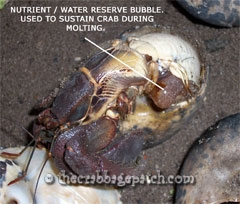
Molting is an inherent cyclic process that occurs in all crustaceans as a crab grows its hard exoskeleton shell becomes too small for its body and it must grow a new one. Their exoskeletons are usually found near the molting crab. This is nourishment to them. Hermit crabs have a molt sac that fills with water and sustains them while underground. Molting is the process by which a hermit crab grows.
 Source: hermitcrabpatch.com
As a result hermit crabs must regularly shed this hard outer skin to grow in size. Unlike the solid green of a regular emerald crab the color of an emerald crab that needs to molt appears more speckled more of whitish green. Hermit crabs molt as they grow shedding their exoskeletons and creating new larger ones to accommodate their larger bodies. The size of a particular hermit crab influences how many times it molts on a yearly basis. During this stage the exoskeleton breaks and sheds.
 Source: pinterest.com
You may notice after they molt they come up to eat and drink to gain strength and then enlarge themselves and harden to their new shell. Molting is basically a natural process that allows them to lose their old exoskeletons growing their bodies and surrounding them with a new larger exoskeleton. The size of a particular hermit crab influences how many times it molts on a yearly basis. When a crab drops its shell it means that something is drastically wrong with the. Do not remove it as they eat it when they are finished.
 Source: nationalgeographic.com
The size of a particular hermit crab influences how many times it molts on a yearly basis. It looks similar to a dead crab but is hollow if you look real close. The exoskeleton should not be confused with the shell. Hence the only way for growth for this species is through the process of molting. Molting means they shed heir exoskeleton which has nothing to do with changing shells.
 Source: pinterest.com
Answer 1 of 2. Hermit crabs have a molt sac that fills with water and sustains them while underground. This stage may take a few days to a week depending on the size of the hermit crab. Molting is described by many as smelling like iodine or chemically. They will completely loose their outer shell and shed it and grow a new skin which hardens to a shell.
 Source: pinterest.com
If they did not they would be crushed by their own exoskeleton. Do not remove it as they eat it when they are finished. The molting cycle is an extremely complex process that is normally divided into 4. Hermit crabs molt as they grow shedding their exoskeletons and creating new larger ones to accommodate their larger bodies. At this point the crab will begin eating the old exoskeleton which helps to recycle calcium and other minerals necessary for the new exoskeletons health and rigidity.
 Source: pinterest.com
Whereas the bigger crabs shed less frequently. It involves shedding of the exoskeleton and for a short time afterward the crab is unable to move until it regains muscle control and the new exoskeleton hardens up. Molting is an inherent cyclic process that occurs in all crustaceans as a crab grows its hard exoskeleton shell becomes too small for its body and it must grow a new one. The exoskeleton of a Hermit crab does not grow. As a result hermit crabs must regularly shed this hard outer skin to grow in size.
 Source: pinterest.com
Hermit crabs molt as they grow shedding their exoskeletons and creating new larger ones to accommodate their larger bodies. It looks similar to a dead crab but is hollow if you look real close. This is nourishment to them. Hence the only way for growth for this species is through the process of molting. The molting cycle is an extremely complex process that is normally divided into 4.
 Source: pinterest.com
Appears to be a molt. They are protecting themselves from predators when they become soft. Do not remove it as they eat it when they are finished. Their exoskeletons are usually found near the molting crab. Molting is an inherent cyclic process that occurs in all crustaceans as a crab grows its hard exoskeleton shell becomes too small for its body and it must grow a new one.
 Source: furwingsandscalythings.com
At this point the crab will begin eating the old exoskeleton which helps to recycle calcium and other minerals necessary for the new exoskeletons health and rigidity. A crab molts by building up enough water pressure in its body to split its old shell. However because crabs and lobsters have a thick shell when they shed it it retains the shape and color of the animal which is what makes them seem so much like it IS the animal. The exoskeleton of a Hermit crab does not grow. The owner must be able to identify the early symptoms of molting.
 Source: pinterest.com
Though hermit crabs are best kept with at least one or two other crabs an overcrowded tank can be stressful or spread disease to all of its inhabitants. Hermit Crabs do shed there skin when they molt - which is when you have to pay VERY close attention. Before the process is complete their bodies are extremely fragile and any external factor such as human contact could possibly kill them. Do not remove it as they eat it when they are finished. A crab molts by building up enough water pressure in its body to split its old shell.
 Source: pinterest.com
Their exoskeletons are usually found near the molting crab. Molting is the process by which a hermit crab grows. Sometimes a new crab loses a. You may need to remove other. It involves shedding of the exoskeleton and for a short time afterward the crab is unable to move until it regains muscle control and the new exoskeleton hardens up.
 Source: pinterest.com
Do not remove it as they eat it when they are finished. Hermit crabs will die without their shells. Their exoskeletons are usually found near the molting crab. Some crabs leave their shell and bury themselves in sand to molt. It looks similar to a dead crab but is hollow if you look real close.
 Source: pinterest.com
Their exoskeletons are usually found near the molting crab. You may need to remove other. The hard carapace of the exoskeleton protects the hermit crab but its also very restrictive. The exoskeleton of a Hermit crab does not grow. You may notice a slight odor in the tank.
 Source: researchgate.net
Hermit crabs will die without their shells. It involves shedding of the exoskeleton and for a short time afterward the crab is unable to move until it regains muscle control and the new exoskeleton hardens up. Molting is described by many as smelling like iodine or chemically. This stage may take a few days to a week depending on the size of the hermit crab. The kid crabs shed even twice or thrice a year and for the adults one molting a year is the general schedule.
 Source: pinterest.com
Hermit crabs molt as they grow shedding their exoskeletons and creating new larger ones to accommodate their larger bodies. Leave your crab in peace until he is done with this very exhausting and stressful event. The owner must be able to identify the early symptoms of molting. At this point the crab will begin eating the old exoskeleton which helps to recycle calcium and other minerals necessary for the new exoskeletons health and rigidity. A crab molts by building up enough water pressure in its body to split its old shell.
This site is an open community for users to do sharing their favorite wallpapers on the internet, all images or pictures in this website are for personal wallpaper use only, it is stricly prohibited to use this wallpaper for commercial purposes, if you are the author and find this image is shared without your permission, please kindly raise a DMCA report to Us.
If you find this site convienient, please support us by sharing this posts to your favorite social media accounts like Facebook, Instagram and so on or you can also bookmark this blog page with the title do hermit crabs shed by using Ctrl + D for devices a laptop with a Windows operating system or Command + D for laptops with an Apple operating system. If you use a smartphone, you can also use the drawer menu of the browser you are using. Whether it’s a Windows, Mac, iOS or Android operating system, you will still be able to bookmark this website.


